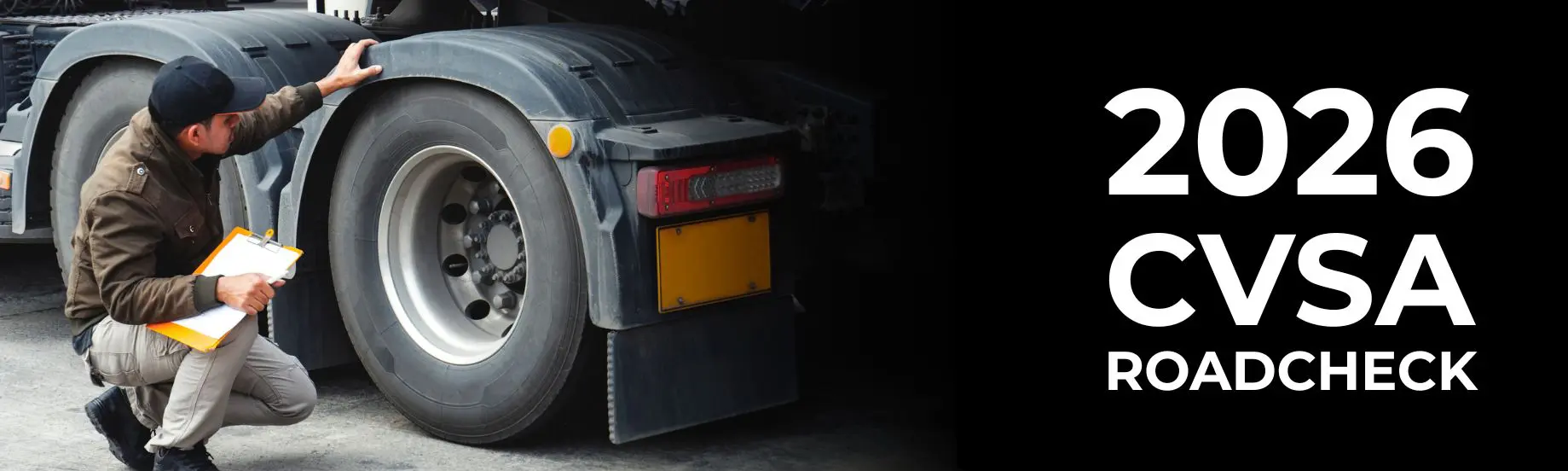
The CVSA Roadcheck is an annual 72-hour commercial vehicle inspection blitz across the U.S., Canada, and Mexico. Fleets that aren’t prepared risk fines, out-of-service orders, and operational delays. Here’s what inspectors will focus on in 2026 and how to keep your fleet fully inspection-ready.
Preparing for the 2026 CVSA Roadcheck
From May 12–14, enforcement teams across North America will launch the CVSA International Roadcheck — the most intensive roadside inspection event of the year.
Organized by the Commercial Vehicle Safety Alliance, this annual blitz targets commercial vehicles, drivers, and safety practices at scale. Whether you run long-haul, regional, or mixed fleets, Roadcheck week brings heightened scrutiny across every aspect of compliance.
This year’s key focus areas are ELD compliance and cargo securement — two of the most common and high-risk violation categories. Here’s what to expect, what inspectors will prioritize, and how to stay inspection ready.
What is the CVSA Roadcheck?
The CVSA Roadcheck is a coordinated 72-hour enforcement initiative across the U.S., Canada, and Mexico, where inspectors carry out thousands of roadside checks at weigh stations, inspection sites, and pop-up locations.
The primary inspection used is the North American Standard Level I Inspection — a comprehensive 37-step review covering both the vehicle and the driver. It is the most thorough roadside inspection and the one most likely to generate violations if fleets are not fully prepared.
Level I inspection: what’s involved?
A Level I inspection is a full-system examination of the commercial vehicle, including:
- Brake systems
- Tires, wheels, rims, and hubs
- Steering and suspension
- Lighting and signals
- Frame and chassis condition
- Fuel and exhaust systems
- Coupling devices
- Driveline/driveshaft
- Windshield wipers
- Cargo securement equipment and tie-downs
Any critical defect can result in an out-of-service order, immediately removing the vehicle from operation.
Vehicles that pass without violations may receive a CVSA decal, signalling recent inspection compliance and reducing the likelihood of repeat stops — a key advantage during Roadcheck week.
Driver inspection: what inspectors review
While the vehicle undergoes its mechanical inspection, the driver faces a detailed compliance review, including:
- CDL and qualification documentation
- Hours of Service (HOS)
- ELD records and log accuracy
- Medical examiner’s certificate
- Seat belt usage
- Skill Performance Evaluation certificate (if applicable)
- Drug & Alcohol Clearinghouse status (U.S.)
- Signs of alcohol or drug impairment
Out-of-service driver violations can immediately halt deliveries and disrupt schedules, making documentation accuracy and log compliance critical.
Alongside the standard Level I inspection, enforcement officers also prioritize specific high-risk violation trends each year based on roadside data and safety patterns.
For 2026, particular attention is expected to centre on ELD compliance and cargo securement — two areas consistently linked to out-of-service violations and operational disruption.
Focus Area 1: ELD tampering, manipulation & falsification
Inspectors will place significant emphasis on ELD records, particularly falsified entries, log manipulation, and improper edits.
Recent data highlights the risk:
- 58,382 violations for falsifying records of duty status (second most-cited driver violation)
- Five of the top 10 driver violations linked directly to HOS or ELD issues
Some violations stem from misunderstanding exemptions or incorrect edits, while others involve deliberate log falsification. In both cases, inspectors will scrutinise log consistency, edit history, and supporting documentation. For fleets, accurate records, proper edit protocols, and ongoing driver training are essential.
Focus Area 2: Cargo Securement
Cargo securement remains one of the most frequent and preventable violation categories. Poor securement affects vehicle stability, increases rollover risk, and creates serious hazards if loads shift, spill, or detach.
In 2025, inspectors issued:
- 18,108 violations for cargo not secured to prevent leaking, spilling, blowing, or falling
- 16,054 violations for unsecured vehicle components or dunnage
In 2026, enforcement will closely assess tie-down condition, anchor points, load distribution, and securement procedures across flatbeds, tankers, dry vans, and mixed loads.
With these focus areas in mind, the operational impact of non-compliance during Roadcheck becomes much clearer.
Why fleet compliance matters more than ever
Roadcheck violations extend beyond short-term delays. Out-of-service vehicles and drivers can cost thousands per day in lost productivity and missed deliveries, while violations also impact safety scores, insurance risk, and overall compliance standing.
More importantly, many violations are linked to preventable safety issues. Strong compliance protects drivers, reduces collision risk, and reinforces your reputation with customers and regulators.
How to prepare for the 72-hour Roadcheck
Inspection-ready fleets don’t rely on last-minute preparation. They maintain consistent standards across vehicles, drivers, and documentation year-round. Key steps include:
- Conduct internal mock Level I inspections
- Reinforce ELD and HOS training with drivers
- Review DOT inspection checklists fleet-wide
- Audit cargo securement procedures by load type
- Use digital checklists for consistent pre- and post-trip inspections
- Keep maintenance schedules and records fully up to date
- Verify all driver documentation and compliance paperwork
Proactive preparation reduces violations, minimizes disruption, and keeps operations moving during peak enforcement periods.
How CameraMatics helps fleets stay compliant
CameraMatics keeps your fleet inspection‑ready 365 days a year, not just for DOT inspections.
Automatic HOS & ELD compliance
Through integration with Geotab, drivers benefit from accurate HOS tracking and reliable ELD reporting, reducing errors and eliminating tampering concerns.
Predictive maintenance & real-time vehicle health alerts
Critical system monitoring flags issues such as brake performance or tyre pressure before they become inspection failures.
Interactive digital checklists
Drivers complete pre- and post-trip inspections in-app, creating consistent, auditable compliance records.
Cargo cameras & securement verification
Visual documentation of load securement supports inspections and dispute resolution.
Centralised compliance & document management
Driver files, inspection reports, and maintenance records are stored in one accessible platform.
Advanced telematics for load & weight monitoring
Helps prevent overloading and improper weight distribution — common causes of citations.
Get your fleet ready for the 2026 DOT inspections
CVSA Roadcheck is more than an enforcement event — it’s an opportunity to strengthen safety, reduce risk, and improve operational performance. With the right preparation and technology, fleets can pass inspections quickly and avoid costly downtime.
Talk to our team today to ensure your fleet is fully inspection ready for Roadcheck 2026.


