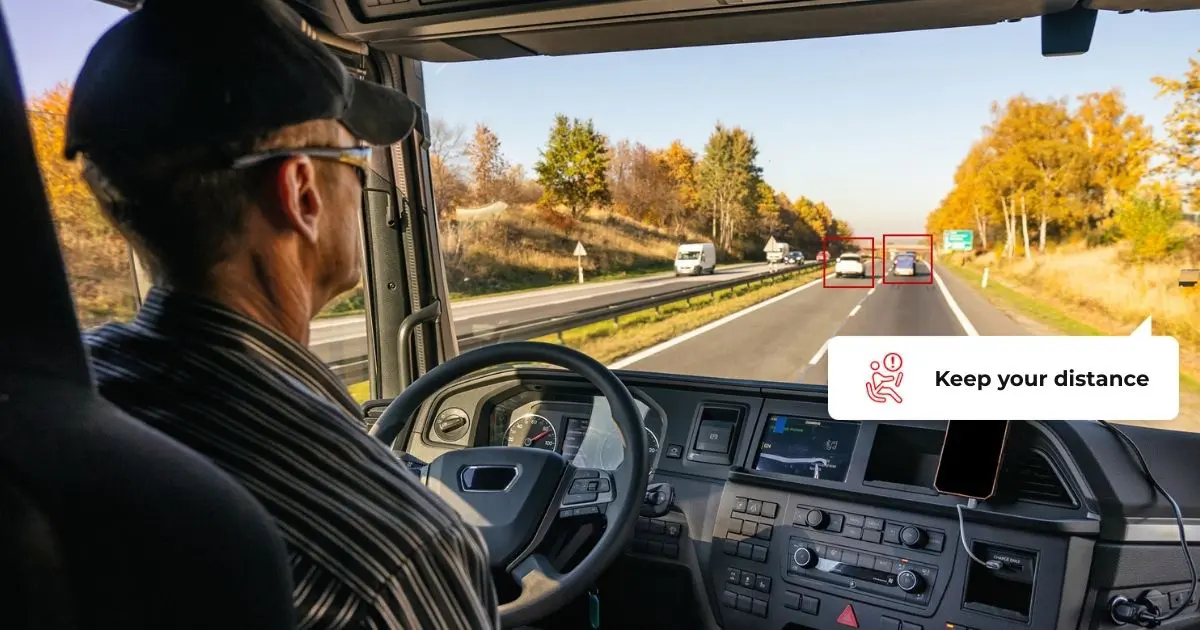
As of May 2026, British Columbia is set to become the first Canadian province to mandate outward‑facing dashcams in commercial vehicles. Bill M217 – the Dashboard Cameras in Commercial Vehicles Act – introduces a clear compliance timeline and establishes baseline technical requirements for fleets operating in the province.
On paper, this is a regulatory update. In reality, it’s a pretty clear signal of where fleet safety across North America is heading.
The mandate applies to commercial vehicles with a gross vehicle weight rating (GVWR) over 11,793 kilograms (26,000 lbs) and requires a forward facing dashcam. The decision to focus exclusively on outward‑facing cameras was shaped by privacy concerns raised around driver‑facing systems.
Why was Bill M217 introduced?
The bill was introduced by Kamloops–North Thompson MLA Ward Stamer, following several high‑profile collisions along Highway 5, incidents that highlighted the need for clearer evidence during post‑collision investigations. Stamer began advocating for mandatory dashcams in 2023, well before entering provincial politics, driven by the goal of improving transparency and accountability on B.C.’s highways.
“Dash cameras save lives. They hold drivers accountable. And they make sure that when a crash happens, the evidence is there.”
By establishing a consistent requirement for forward‑facing video, the legislation aims to support faster incident resolution, reduce disputes, and provide investigators with reliable visual evidence when collisions occur.
When does B.C.’s new dashcam law actually kick in?
Bill M217 becomes active six months after it receives Royal Assent, the formal approval by British Columbia’s Lieutenant Governor. The bill passed third reading unanimously in May 2026, and Royal Assent is anticipated in the near future. Once granted, the compliance countdown begins immediately.
If Royal Assent is approved in mid‑2026, the six‑month window places the compliance deadline in early 2027. For fleets, this means planning needs to begin well before the formal activation date. Even with a half‑year runway, getting a full fleet fully compliant isn’t an easy task.
These are the key preparation steps you’ll need to consider:
- Identify which vehicles fall under Bill M217
- Hardware selection and procurement
- Scheduling installations across all affected vehicles
- Driver communication and training
- Updating internal safety and privacy policies
The Ministry of Transportation has indicated that detailed regulations – including enforcement processes, exemptions, and penalties – will be published within six months to one year after Royal Assent. Until those regulations are released, fleets should prepare based on the requirements outlined directly in the Act.
What are the dashcam requirements for Bill M217?
The requirements themselves are fairly straightforward, but they do set a clear baseline. To comply, dashcams must:
- Be forward‑facing
- Retain at least 72 hours of video recording
- Record in a minimum HD video format of 1080p
- Include night vision capability
- Record to local storage using the manufacturer’s default settings
- Be unobstructed during vehicle operation