Bill M217: What does B.C.’s new dashcam mandate mean for fleets?

British Columbia is set to become the first Canadian province to mandate dashcams in commercial vehicles. The Bill M217 requires all commercial vehicles over 11,793 kg (26,000 lbs) to install outward-facing dashcams. The law comes into effect after Royal Assent, with fleets given six months to become compliant.

Posted 23 Jun 2026

As of May 2026, British Columbia is set to become the first Canadian province to mandate dashcams in commercial vehicles.

On paper, it’s a regulatory update. In reality, it’s a pretty clear signal of where fleet safety across North America is heading.

The Dashboard Cameras in Commercial Vehicles Act (Bill M217) means any commercial vehicle operating in B.C. with a gross vehicle weight rating (GVWR) over 11,793 kilograms (about 26,000 lbs) will need to have an outward-facing dashcam installed.

The legislation was deliberately focused on outward-facing cameras following concerns raised around driver-facing systems and privacy.

It’s been a long time coming. The bill was introduced by Ward Stamer, MLA for Kamloops–North Thompson, following a series of fatal crashes along Highway 5 – something he had been pushing for since 2023, even before entering provincial politics.

“Dash cameras save lives. They hold drivers accountable. And they make sure that when a crash happens, the evidence is there.”

At its core, the legislation is about visibility, accountability, and faster resolution when incidents occur.

When does B.C.’s new dashcam law actually kick in?

The law comes into force six months after Royal Assent, the formal approval by B.C.’s Lieutenant Governor. Bill M217 passed third reading unanimously in May 2026, and the bill’s sponsor expects Royal Assent any day now.

If that is the case, the compliance deadline for fleets will fall somewhere between late 2026 and early 2027. On paper, six months may sound like plenty of time, but for larger fleets or those operating across multiple locations, it’s not as simple as just installing cameras to your vehicles.

Sourcing the right hardware, scheduling installations, and securing driver buy-in all take time, and should be planned well in advance to avoid a last-minute scramble.

What are the dashcam requirements for Bill M217?

The requirements themselves are fairly straightforward, but they do set a clear baseline. To comply, dashcams must:

  • Retain at least 72 hours of recording
  • Record in a minimum HD video format of 1080p
  • Include night vision capability
  • Record to local storage using the manufacturer’s default settings

Nothing groundbreaking. But it does ensure that when footage is needed, it’s actually accessible, which hasn’t always been the case.

Who’s responsible for compliance?

The responsibility doesn’t fall on one person. It depends on who owns the vehicle, and how it is operated.

  • Fleet owners: Responsible for purchasing, installing, and maintaining the camera hardware.
  • Lessees: If the commercial vehicle is leased, compliance responsibility falls to the individual or company leasing it.
  • Commercial drivers: Operators must ensure the camera is actively recording at all times and that the lens is not obstructed.

What commercial vehicles are included in the B.C. mandate?

This is where it gets slightly less black and white. The legislation applies to “commercial vehicles” under B.C.’s Commercial Transport Act, combined with that 11,793 kg threshold.

In practical terms, you’re looking at:

  • Heavy goods vehicles (tractor-trailers, articulated trucks)
  • Larger delivery and box trucks
  • Buses and some passenger transport vehicles

So heavy trucks are the main priority. But the wording leaves a bit of room for interpretation, and that usually means one thing: the scope could evolve.

For fleets, that’s worth keeping in mind. This isn’t just about meeting today’s requirement; it’s about being ready for what comes next. The right, adaptable camera solution can help future-proof that decision.

Protecting drivers: the B.C. Trucking Association perspective

The B.C. Trucking Association has backed the move, and one stat from their statement stands out.

Commercial drivers are not at fault in roughly 75–80% of collisions involving their vehicles.

That’s a huge number. And it highlights the real value of commercial vehicle cameras not just recording incidents but protecting drivers when they are not at fault. Clear footage can mean faster claims, fewer disputes, and a lot less time wasted investigating the incident.

With around 65,000 heavy commercial vehicles operating in B.C., this has the potential to make a real impact.

Why record incidents, when you can prevent them?

If you take a step back, this law is really about recording what’s already happened – which is important, but by that stage, it’s too late.

More and more fleets are now focused on preventing these incidents in the first place. That’s where AI-powered cameras come in.

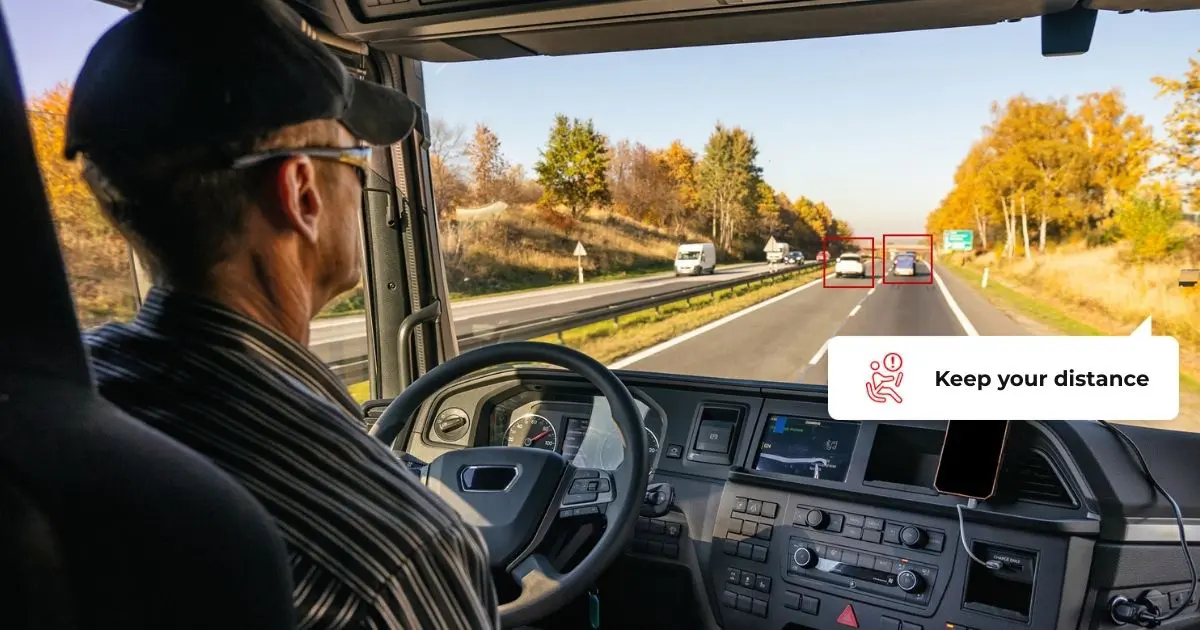
The majority of modern dashcams in commercial vehicles now come – or at least should come – with built-in risk detection, helping to support drivers in the moment when a situation is starting to develop, such as:

  • Closing too quickly on the vehicle ahead
  • Following at an unsafe distance
  • A pedestrian stepping onto the road in front of the vehicle

That’s a real shift in how these systems are used. It’s no longer just about capturing what went wrong – it’s about intervening while there’s still time to change the outcome.

And for fleets, that’s the real opportunity. Not just meeting a compliance requirement, but choosing technology that actively supports drivers, reduces risk, and improves day-to-day safety on the road.

keep your distance - AI-powered alerts in forward facing camera

How CameraMatics can help

CameraMatics is built around exactly that shift, from reactive recording to proactive risk prevention.

Our AI-powered dashcams meet and exceed the Bill M217 specification: 1080p recording, night vision, and 30-days of storage as standard. But compliance is only part of the picture.

Where CameraMatics goes further is in what happens before an incident occurs. Built-in AI-powered risk detection alerts drivers in real time when a situation is developing – closing distance, unsafe following gaps, pedestrians stepping out on the road – giving them the chance to act while there’s still time to change the outcome.

For fleet managers, all footage and alerts are automatically uploaded to a central dashboard, accessible from desktop or mobile. This allows teams to review incidents quickly, streamline investigations, and support drivers with targeted coaching based on real driving behaviour.

Whether you’re running five vehicles or five hundred, you get a clear picture of risk across your whole operation, not just a recording of what went wrong.

With B.C. likely just the first province to legislate this, it’s worth investing in a solution that’s built to scale with whatever comes next.

So, is the dashcam mandate just going to be for B.C.?

Right now, yes. Longer term, probably not. B.C. might be first, but it’s unlikely to be the last to introduce something like this. Once one region sets a precedent around safety and accountability, others tend to follow.

For fleets operating across Canada, that raises a bigger question: Is this just another regional regulation to deal with or the start of a nationwide standard? As Ward Stamer, the man behind the bill says;

“Good ideas shouldn’t belong to one party. Every member who voted for this heard from constituents who’ve lost people on our highways. This is what the legislature should look like.”

The compliance deadline is coming. But the fleets that will benefit most from Bill M217 aren’t the ones who do the minimum to meet it, they’re the ones who use to understand what’s happening across the fleet, improve decision-making, and reduce avoidable risk on the road.

If you’re planning your next steps, now is a good time to speak with our team and explore what that looks like for your fleet.